

From the Hort Desk

We are pleased to have guest author, John Murgel, CSU Extension Specialist in Douglas County, contribute a timely article on the much-dreaded weed (bindweed) and some interesting solutions. Thank you John!
John Murgel – CSU Extension Specialist, Horticulture and Natural Resources
My Heroes! Powdery Mildew, Bindweed Leafminer and Bindweed Moth
I think we can all agree that bindweed (Convolvulus arvensis) is the worst. Anyone who has gardened for a while will have stories of its resilience and the pains taken to attempt its removal from an otherwise ideal garden plot. It can feel like an uphill struggle, waged by the gardener, alone against an indestructible foe. Herbicides, persistent pulling, competition with other plants – all these methods take repeat application and diligent application. It seems if the gardener relaxes even for a moment (“I just wanted to get a drink of water!”) the bindweed is back and more vigorous than ever.
But did you know that several natural controls are out there trying to take it out along with us? Powdery mildew is one that most folks have probably seen in late summer, but two insects are here also making their mark.
Unfortunately, none of these is going to eliminate bindweed any time soon (Don’t schedule your pickleball game for your usual weeding time.), but it is nice to know that the plant isn’t invincible, isn’t it?
Powdery mildew is a fungus that affects the leaves (and sometimes stems) usually in the late summer and fall. Bindweed vines take on a somewhat ghostly appearance as the white fungal threads grow from pinpoint infection sites to eventually cover entire plants. The fungus takes resources from the plant, weakening it, but won’t kill it even after years of infection. New infestations come from overwintered spores on leaf debris that are blown or splashed onto leaves. Powdery mildew is the same fungus that impacts squash and pumpkins, lilacs, zinnias, and many other garden plants – but it won’t be jumping from one to another. Each plant has its own variety of specialized powdery mildew that can’t grow on other plants.
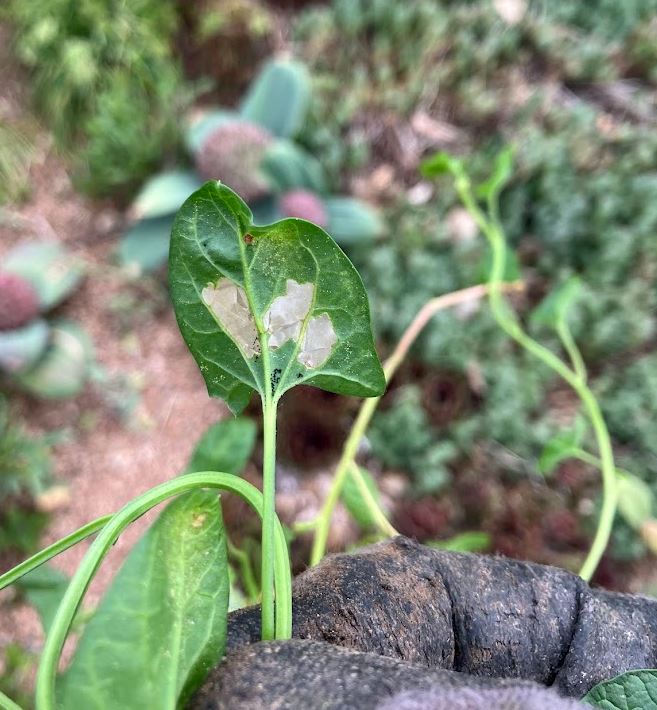
Between now and early summer, you might see signs of bindweed leafminers (Bedellia somnulentella) and bindweed moths (Tyta luctuosa). Both are members of the Lepidoptera, the insect order that includes butterflies and moths. Bindweed leafminers you will likely see by their symptoms and signs, but aren’t likely to spot the insects themselves. Firstly, because the moths themselves are quite small – with a wingspan of no more than a centimeter, and second because they are most active at night. They are light brown and fold their wings tightly when landing, making them almost invisible when holding still. You are more likely to see the signs of caterpillars. Look for cleared window-pane sections in bindweed, spotted with black frass (droppings). If you were to open this lesion carefully, within you would find the adorable (trust me) caterpillars. Consider leaving this section of bindweed to help the larvae develop and the moths to spread. More information here.
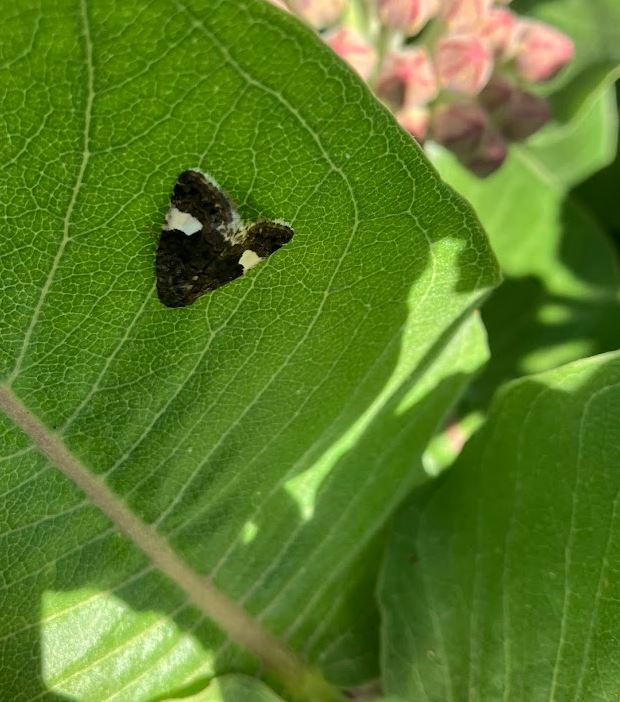
Bindweed moths are more noticeable, with their black wings with prominent white spots. They are day-flying, too, which means you are likely to see them visiting flowers when you’re out enjoying the garden. They are slightly smaller than their famous cousin, the miller moth, but more striking because of their elegant black and white outfits. Bindweed moth caterpillars feed (in the more customary fashion) on the outside of the bindweed plants. Look for them in the garden! More information here.

