

Go Bare If You Dare!
By Kathleen DeVries, Colorado Master Gardener
We are talking about bare-root planting of course. But what is it? Bare root is exactly what it says: The roots are bare, with no soil or other planting materials between them and the new soil environment in which they will grow. Removing the soil and exposing the roots may seem scary but there are several good reasons to consider this option, particularly for trees and shrubs. They include:
- These large plants are less expensive
- They are easier to transport and to plant without the weight of the soil
- There is no risk of girdled roots
- “A bare-root tree contains 200% more roots resulting in a stronger, healthier sapling.” (Cornell University)
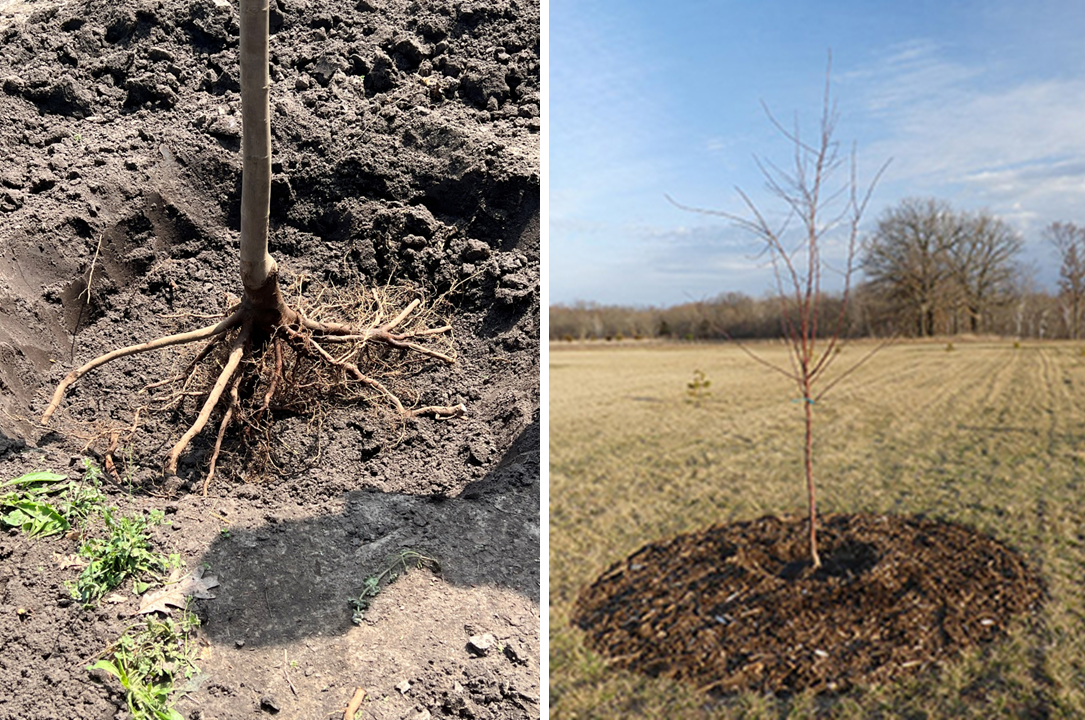
Planting a bare-root tree is somewhat different than planting a typical balled-and-burlapped tree. Plant the bare-root tree in spring while it is still dormant and temperatures are around 40 to 55 degrees F, and follow these steps:
- Unpack the tree and brush off any damp packing material. Trim dead roots and spread the roots out to determine the root spread. Also measure the distance from about 1 inch above the top large structural root to the bottom root. This will determine the depth of your planting hole.
- Let the roots sit in room temperature water while you prepare the hole. Tiny roots will die if left exposed to the air for 30 or more minutes.
- Dig the hole in a saucer shape about 3 times the diameter of the root spread. Dig it deep enough that the bottom root will rest on undug soil and the top structural root will be 1 to 3 inches below the surface*. Leave a small mound at the bottom of the hole. Be sure that the trunk flare is visible above ground. (Note: Species such as crabapples, hackberry, linden, poplar and maple should have structural roots within 1 inch of the surface.)
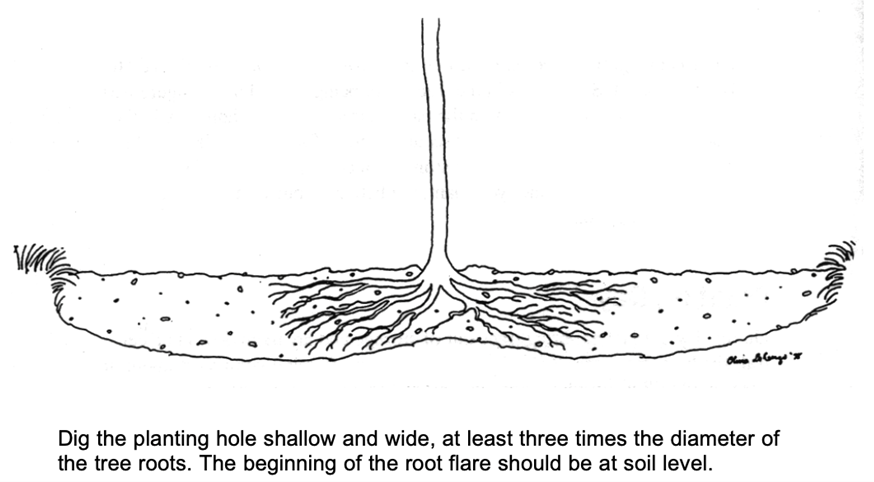
- Gently place the plant on the mound spreading the roots horizontally. Start to fill the area between roots, spreading each layer of roots as you go. Tamp down the soil at each layer but do not stand on the soil.
- Stake your newly planted tree to provide some extra support.
- Water the tree thoroughly to settle the soil. If this causes the backfill soil to sink below the desired depth, add more soil and water again.
- Carefully mulch the area around the tree but do not mulch the area directly adjacent to the tree itself. The mulch will help the roots retain their moisture, but you do not want moisture next to the bark causing bark decay.
- For the first 1-2 weeks water your tree daily. For the next 10-12 weeks water every 2 to 3 days. After 12 weeks, water weekly until the roots are established.
You can also use this method when planting perennials. Watch this video from Plant Select to learn how.
Resources
Planting Bare-Root Trees (South Dakota State University Extension)
Care of Recently Planted Trees (CSU Extension)
Watering Newly Planted Trees and Shrubs (University of Minnesota Extension)

