

Designing Your Dream Garden
Part Six of a Six Part Series
By Kathi Thistlethwaite, Colorado Master Gardener
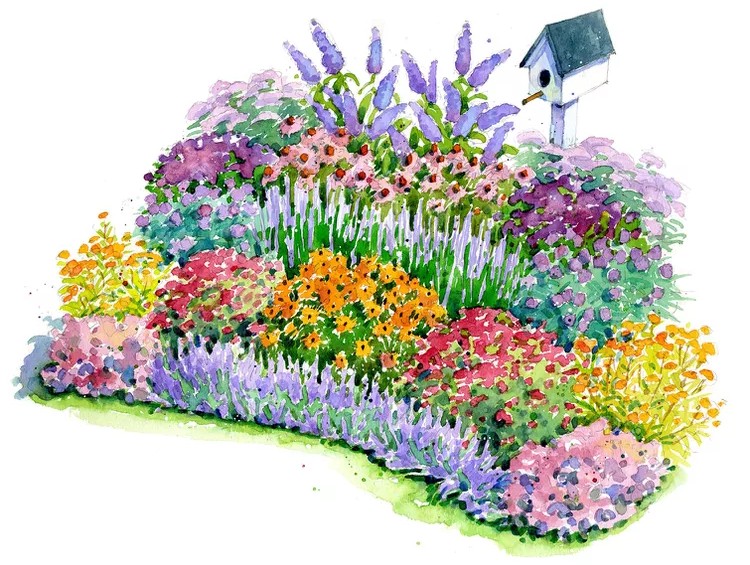
If you have been following this series, you are at the last step: putting it all together. You have collected ideas for inspiration and refined them based on what is possible in your space. You have measured and analyzed the site and put pencil to paper, making note of sun, shade, wind, drainage and numerous other details that dictate what goes where. Building on this framework, you’ve also decided on the style and tone of the garden and are ready to make your vision a reality. Each decision builds on the next, resulting in a finished design plan. This process is easily adaptable to any garden or landscape area and will help in making choices based on personal preference and available space. You can do this yourself or hire a professional to do a plan.
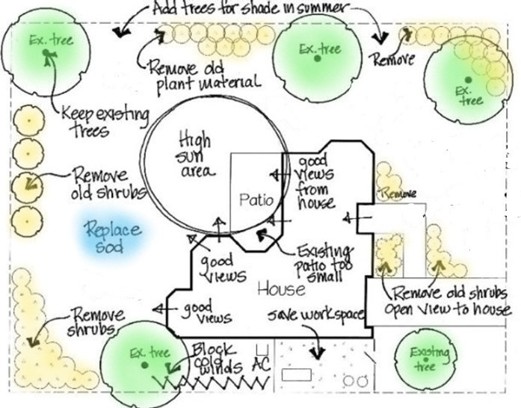
Putting it all together involves plant selection and placement and irrigation. When doing this, note what the design plan indicates such as screening for privacy or wind, color and texture, sun/shade, water and other attributes. Place large plant material first; then place perennials, grasses and groundcovers. Group plants with similar water requirements and leave room for the mature size of the plant. Fill empty spaces temporarily with annuals if needed.
For gardeners who are planning to update, change, or rearrange a garden, the design process (or parts of the process) will help in choosing new elements for the garden in the same way as it does for a new garden.
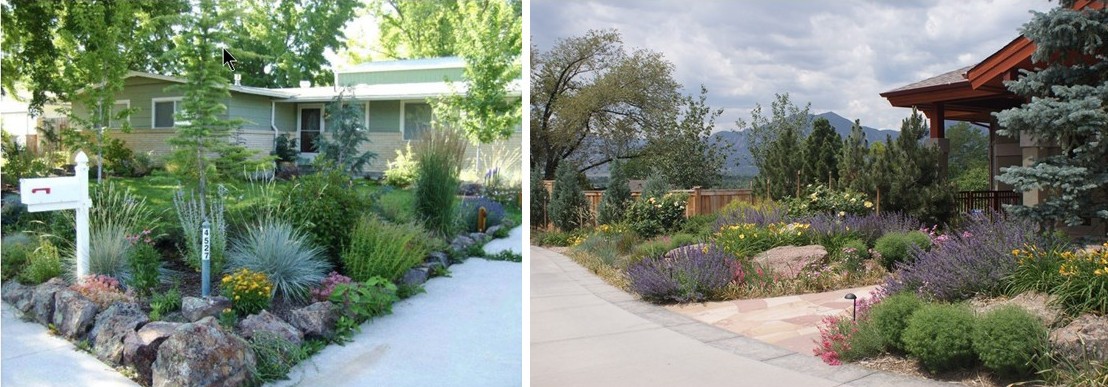
Renewing gardens is much more simplified than installing a new garden or tackling a complete makeover, but still requires site analysis, research and planning. For instance, you might want to transition a garden to shade plants where trees have grown and provide too much shade for sun loving plants. Or you want to replace traditional ornamentals with native plants in the sunnier parts of the garden to attract pollinators and insects and support the food web. Changes like these can be done in a phased approach. This is a budget-friendly way to try out new plants, replace plants that have outgrown their space, or update distinct areas of a garden. Aim for a percentage of the original garden to be changed at any one time and retain the desired plantings and features of the original garden. A mixture of styles can be very interesting and pleasing to the eye, as well as more cost effective.
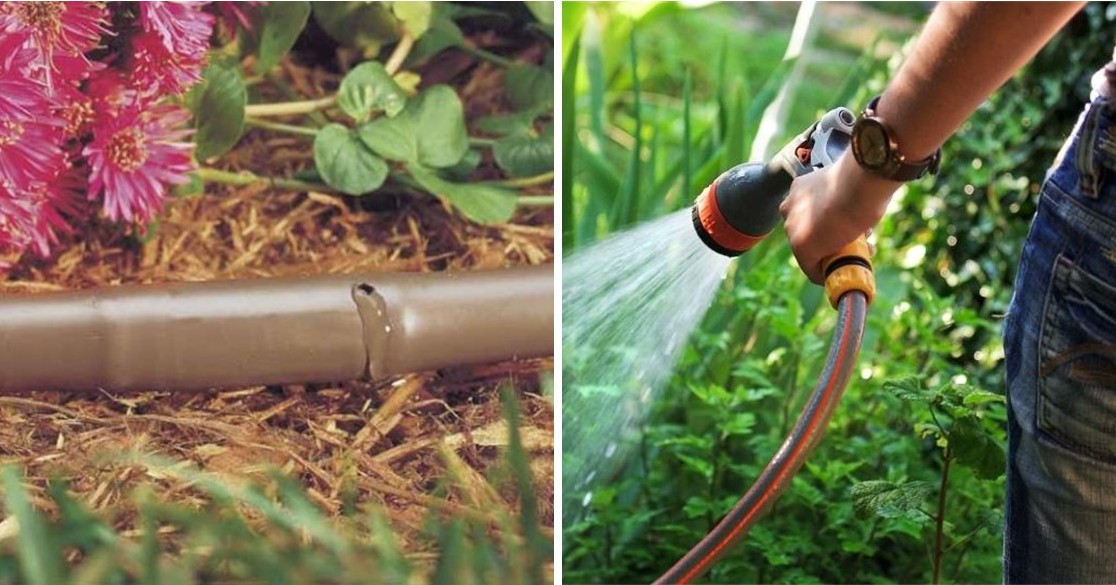
One important consideration of gardening is irrigation. It is a “must” for ornamental plantings and even for native plantings initially. Many irrigation systems are available to the gardener: drip systems, pop-ups, and soaker hoses that run on irrigation clocks. Or gardens can be watered by hand. Whatever the method, the plantings need to be watered appropriately. Note that waterwise and native gardens have low water needs but this does not mean no water. These gardens need water, especially during the first two years of establishment. Container gardens require more frequent hand watering because the entire plant is above ground.
By following the steps outlined in this series, you can create a functional and pleasing design that meets your needs, no matter how large or small the garden. Use the tools and information to make the process fun and rewarding. Thank you for your interest and…happy gardening!
“To plant a garden is to believe in tomorrow.”
–Audrey Hepburn
All articles in the series are available here.
Resources
- www.plantselect.org. Plant Select has design ideas and downloadable designs that show plant combinations.
- www.extension.colostate.edu. CSU Extension has native plant garden guides with plant lists, as well as planting plans and designs.
- Contact one of several professional organizations for design help:
- Association of Professional Landscape Designers: www.apld.org
- American Society of Landscape Architects: www.asla.org
- Associated Landscape Contractors of Colorado: www.alcc.com

