

From the Hort Desk
By Lisa Mason, CSU Extension Horticulture Specialist, Entomologist
Beneficial Native Beauties for Autumn
Native plants can complement any home landscape. Many have low water requirements once they are established and, generally, they require less maintenance than other ornamental plants (e.g., fertilizers and pesticides). Native plants can be added to the landscape piecemeal or in a landscape overhaul. They offer a different aesthetic like early spring blooms, fall color and winter interest, but with the added benefit of providing forage and habitat for pollinators, beneficial insects, birds and other wildlife. When building a landscape for pollinators and wildlife, adding plants of different heights can be helpful for providing habitat. For instance, hummingbirds may feed on nectar from red and pink-colored, tubular flowers. They will also feed on insects that are foraging nectar from other flowers. In addition, they are likely to build their nests in protected areas of trees or tall shrubs. Plant diversity supports pollinator and wildlife diversity.
While planting native perennials is common practice, listed below are examples of shrubs and grasses that support the ecosystem and offer unique colors and textures during the fall and winter seasons.
Shrubs
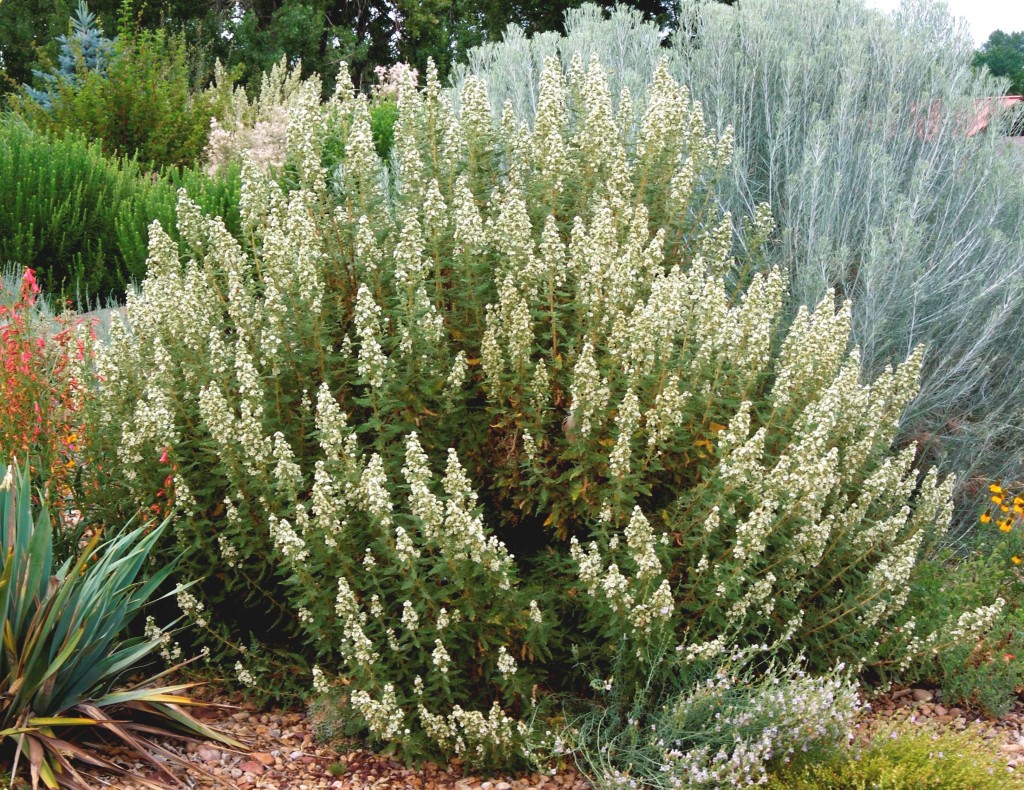
Fernbush (Chamaebatiaria millefolium) is native to much of the Intermountain West. It’s a handsome low-water, deer-resistant shrub that grows 5 to 6 feet wide and 5 to 6 feet tall. The showy white flowers attract a variety of pollinators and other beneficial insects in July and August. Both the lacy-like foliage and flowers are aromatic, and the reddish-brown stems add winter interest.
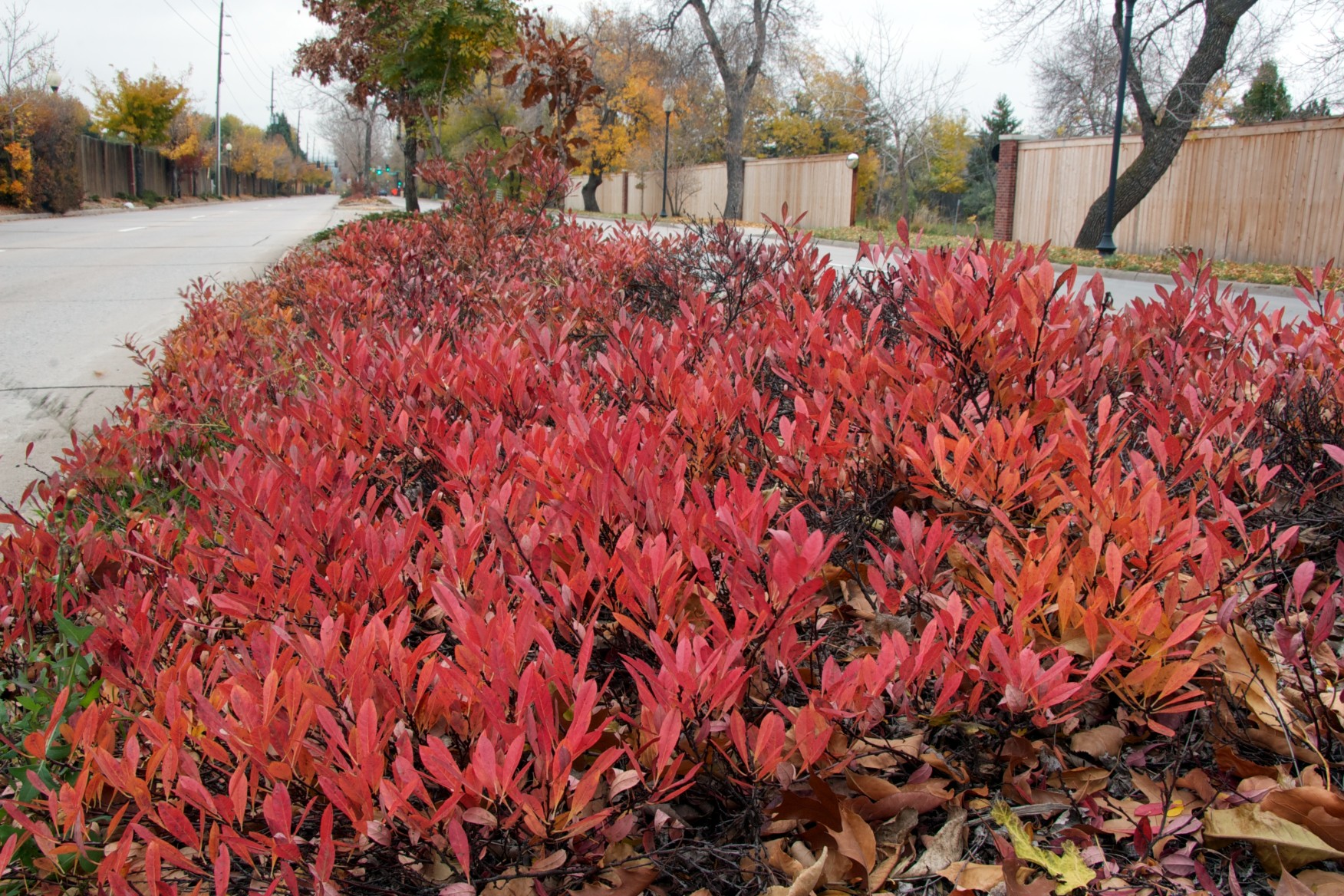
Western sandcherry (Prunus pumila var. besseyi) offers year-round benefits. PAWNEE BUTTES® is a variety of western sandcherry that has white blossoms in the early spring that attract early season bees and other pollinators. This shrub produces berries that feed a variety of birds and wildlife in the late summer. The berries are not edible. The foliage turns a reddish-purple color in the fall. This shrub grows only to a height of 18 inches but can spread between 4 to 6 feet. This is a great option if you are looking for a low-maintenance shrub to take up space in a low-water landscape.
Sunflowers (Helianthus spp.) are a great option for a low-water perennial. A variety of species occur in Colorado. Maximilian sunflower (Helianthus maximiliani) is often a favorite. Sunflowers bloom in late summer into fall. The flower heads attract a diversity of pollinators. If the seedheads stay intact, goldfinches, chickadees and other birds will feed on seeds into fall and winter. If sunflowers are not your favorite, consider chocolate flower (Berlandiera lyrata) as an alternative. This plant is much smaller than sunflowers growing 12 to 20 inches tall. The small, yellow daisy-like heads attract pollinators.
Other shrubs to consider include rabbitbrush, Apache plume, shrubby cinquefoil, three-lobed sumac, and Fremont mahonia.
Grasses
Native grasses are a wonderful addition to a landscape. They are drought tolerant and offer a variety of textures and colors all-year around. In addition, they provide habitat and shelter for overwintering pollinators and beneficial insects. The queen bumble bees is one example of an overwintering insect that can benefit from finding shelter in grasses. Some species of butterflies and moths host exclusively on native grasses to complete their lifecycle.
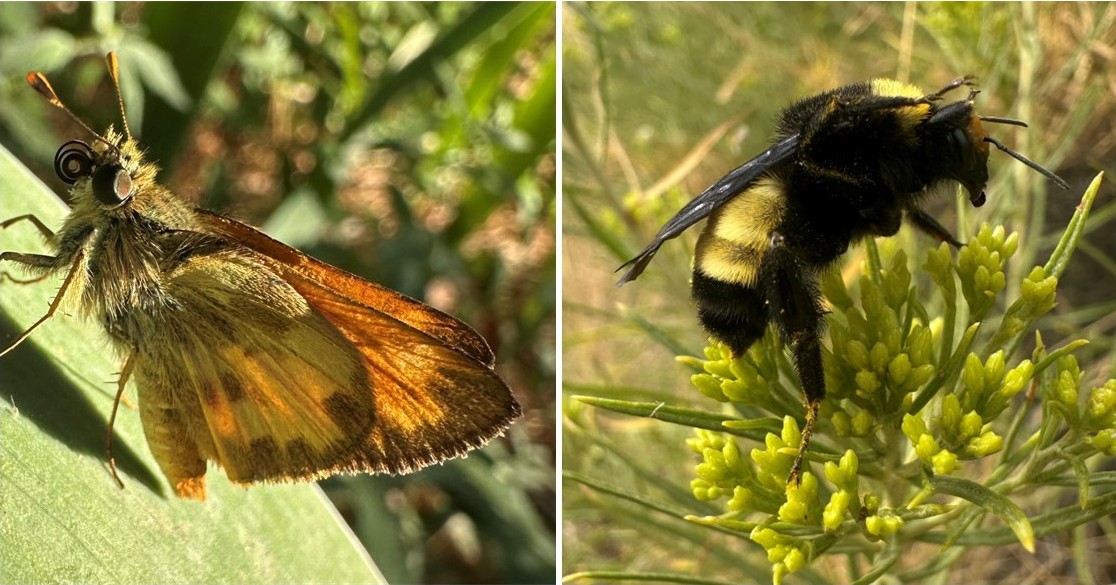
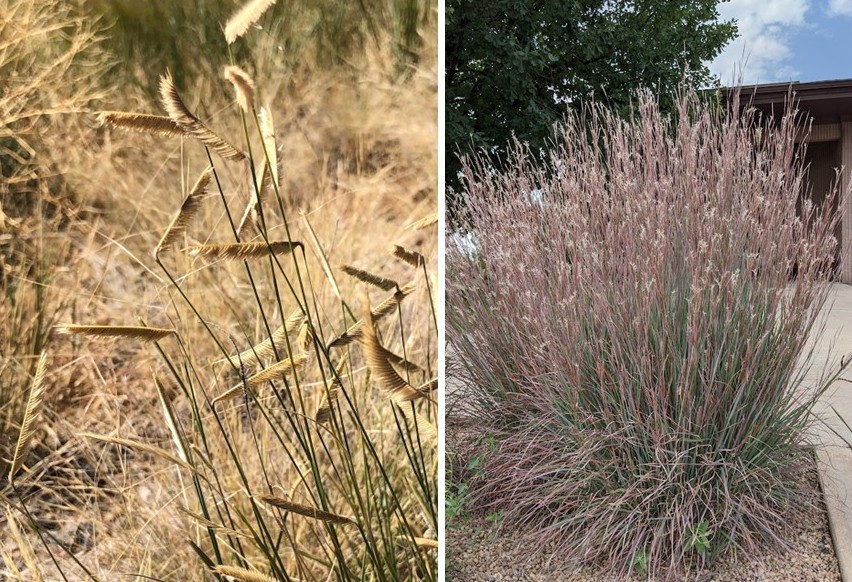
Little bluestem (Schizachyrium scoparium) found in prairie ecosystems stands out because of its blue-green color in the summer and bronze to purple color in the fall and winter. This drought-tolerant grass grows over 3’ tall in clumps. The fuzzy seedheads add softness to the landscape. It is an important host plant for many species of skipper butterflies.
Blue grama (Bouteloua gracilis) is the Colorado state grass. While it’s a bunchgrass that is an attractive ornamental plant in low-water landscapes, blue grama can also be used as a low-water lawn alternative. The eyelash-like seedheads develop in the late summer and will stay through the winter. It can spread up to 18 inches and grows up to a height of 18 inches. Blue grama also is an important host plant for different species of skipper butterflies. Birds and other wildlife also benefit from blue grama.
Other grass options include sideoats grama, switchgrass and big bluestem.
Leave the leaf litter
Leaf litter supports hibernating queen bumble bees by providing them with a sheltered area for the winter. Solitary bees are well protected in their underground or cavity nest, but leaf litter may provide some insulation for their ground nests. Leaf litter also provides shelter for insects during the winter. For example, lacewings are important predators of pest insects and overwinter in leaf and debris piles. Wooly bear caterpillars are a great example of a moth that relies on leaf litter. They overwinter in the caterpillar stage by hibernating in leaf litter. Mourning cloak butterflies overwinter as adults and seek a protected area in which to shelter for the winter. They are among the earliest butterflies to emerge in the spring. Overall, leaf litter can provide shelter for a diversity of overwintering insects and wildlife. It makes a great mulch for perennial and vegetable gardens; the leaves return critical nutrients back to the soil. While leaf litter is a valuable component to the landscape, it is important to remove leaves from the turf to prevent mold and disease growth.
Water your plants this fall and winter
Colorado has periods of time when precipitation is limited. Consider watering your plants and trees during the fall and winter when temperatures are warm. This is especially important if plants are still in the establishment phase. This will benefit their long-term health. Healthier plants can better support beneficial insects and birds by providing more nectar and pollen, more berries, and potentially more sheltered spaces for habitat.
For plant lists and more information on adding native plants to the landscape, please visit the following websites: Colorado State University Extension, Colorado Native Plant Society, Plant Select, The Xerces Society, and National Wildlife Federation. For gardening and yard questions, reach out to your local county Extension office.

