

Renewing Your Soil: Regenerative Practices in the Home Garden
By Mary Gifford, Colorado Master Gardener
Now that we are settled into the winter season, we may not have our hands directly in the soil, but our minds continue to revolve around plants, gardens, lessons learned and new techniques to try. A question I have wondered about for some time is: Can large scale regenerative agricultural practices be applied to smaller scale home gardens? After spending some time at the Cheyenne-Arapaho Park (CAP) garden in Denver, I discovered that these practices are being employed at one of the Colorado Master Gardener plots within this Denver Urban Garden.
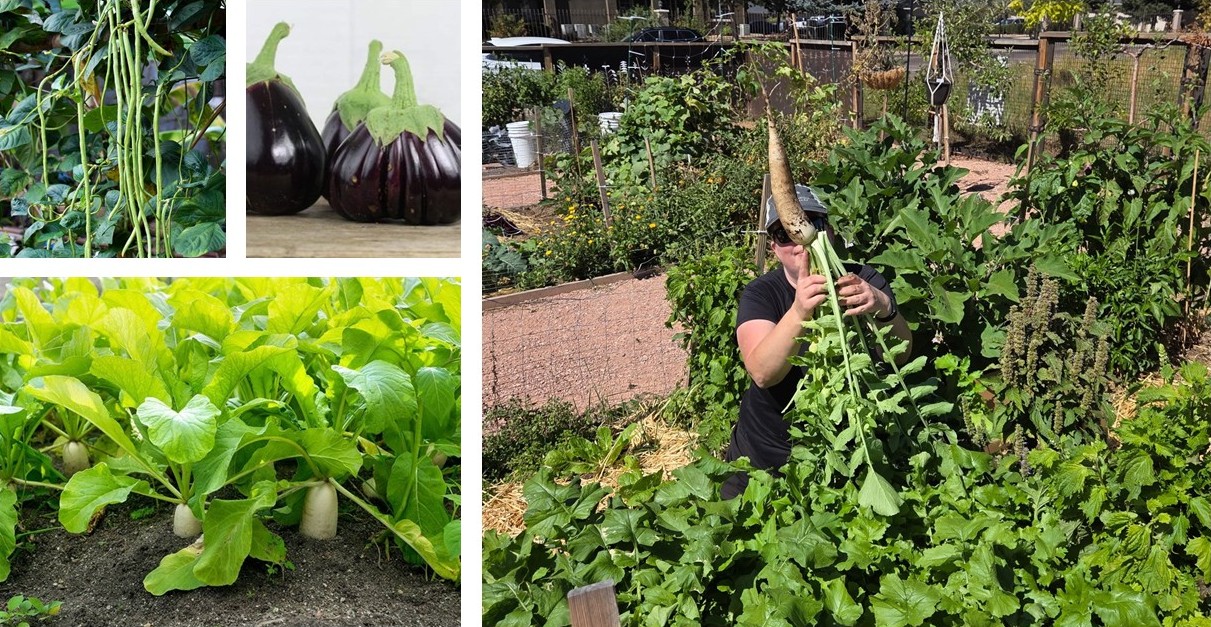
The garden is a tidy collection of rectangular garden plots. Chock full of vigorous plants from all over the world, one of these plots has been an experimental area for regenerative garden techniques for the last two years and the results have been very encouraging. According to a CSU article, Ground Level- Examining Soil Health as a Key to Successful Farming and Environmental Well-Being, there are five main principles of regenerative agriculture. Four of these principles are being implemented in the plot, tended by CMG Elaine Davis.
Key Principles
- Minimizing soil disturbance is practiced in the springtime to loosen the soil by using a garden fork and sliding it into the soil at about a 30° angle, lifting up to just barely crack the soil. Then the fork is slid back out. Soil is not disturbed for the remainder of the season. Low till or no till is critical for many reasons: to retain soil moisture, to prevent weed seeds from getting to the surface and germinating, to preserve soil microbes, and to preserve soil invertebrates such as earthworms, beetles and others.
- Maximizing soil cover can be achieved by adding grass clippings or clean straw to open areas of soil. As with minimizing soil disturbance, this helps tremendously with controlling erosion, increasing the carbon content of soil and conserving moisture.
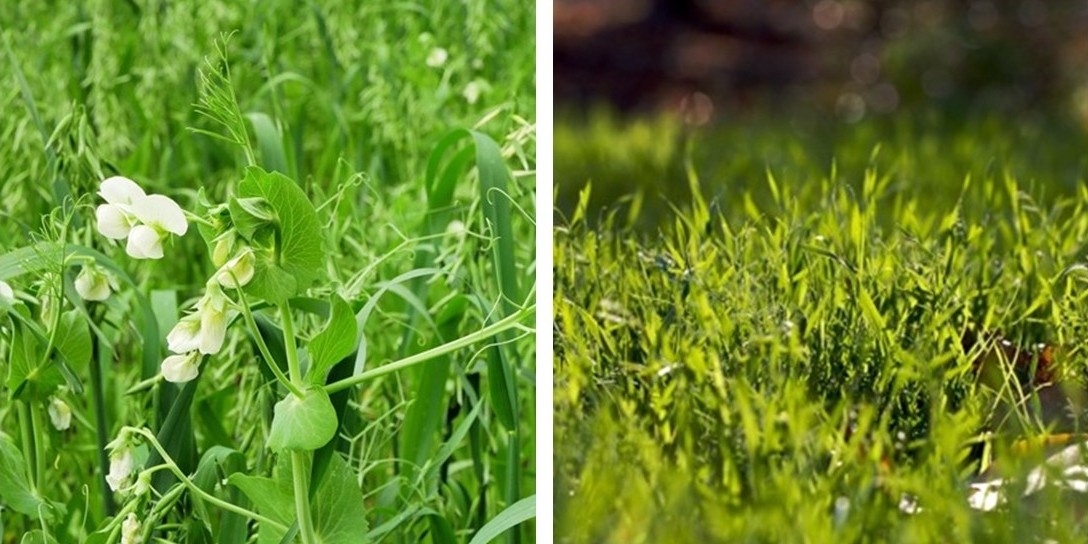
- Maximizing living roots in the soil refers to having live plants, such as cover crops, growing throughout the entire year. Researchers have found this principle to be the most significant for creating healthy and resilient soil. It reduces erosion, increases soil organic matter, increases biological variety, increases the nitrogen supply and provides natural weed control.
- Maximizing diversity of plants is achieved by planting different vegetables or crops in different parts of the garden each year. It is also achieved by planting a variety of vegetables throughout the growing season. Different plant roots will encourage the growth of different soil bacteria, enriching the soil.
- Incorporating livestock in the garden. Because the garden does not allow for the use of livestock, gardeners apply alfalfa meal to the soil once per season as fertilizer.
Once these principles are applied, it is useful to have a scientific measure to determine if indeed the soil has become healthier. Healthier soil means healthier, more nutrient dense vegetables that can easily fight off diseases and pests. Further conversations with master gardeners tending the CAP garden plot revealed some interesting and positive changes in the soil’s health, particularly in terms of microbial activity. Lab tests showed over a 100% increase in microbial life from 2024 to 2025. You may ask why more microbial life is better. The answer lies in the job the microbes perform. They are breaking down organic matter in the soil, thereby making significant amounts of nutrients available to the garden plants.
The use of regenerative practices for just two seasons has proven to be quite successful. Allowing soil microbes to flourish by keeping soil and roots in place and maintaining soil moisture provides a huge boost to plant health and naturally prevents most weeds from appearing. The 2025 harvest from this 93 square-foot plot has been impressive.
A source of inspiration and information on regenerative farming/gardening was the book What Your Food Ate by David R. Montgomery and Anne Biklé. It describes how soil in the United States has been damaged by overplanting, lack of crop rotation and other practices. It then explains scientific studies that show the effects of regenerative agriculture. When farmers implemented regenerative techniques, the yield was more abundant, and the soil was full of microbial life.
As demonstrated by the Cheyenne-Arapaho Master Gardener plot, regenerative techniques can be applied to a home or community garden with positive results. Let’s see how many more gardens to which we can apply these principles, for a bountiful garden harvest in 2026.

