

A Season’s Summary
By Jessica Asimus, Colorado Master Gardener
Arapahoe County Master Gardeners maintain eight demonstration gardens across the county. Seven of these gardens grow produce that is donated to local communities and one showcases pollinator plants. Gardening in Colorado is notoriously difficult due to the short growing season and the changing weather, but our CMGs are not discouraged. Each demonstration garden found ways to share successes and teach from their struggles. The gardens learn from each other and their communities while continuing to thrive, using the lessons from each season to prepare for the next. While all eight gardens are unique, they experienced similar challenges.
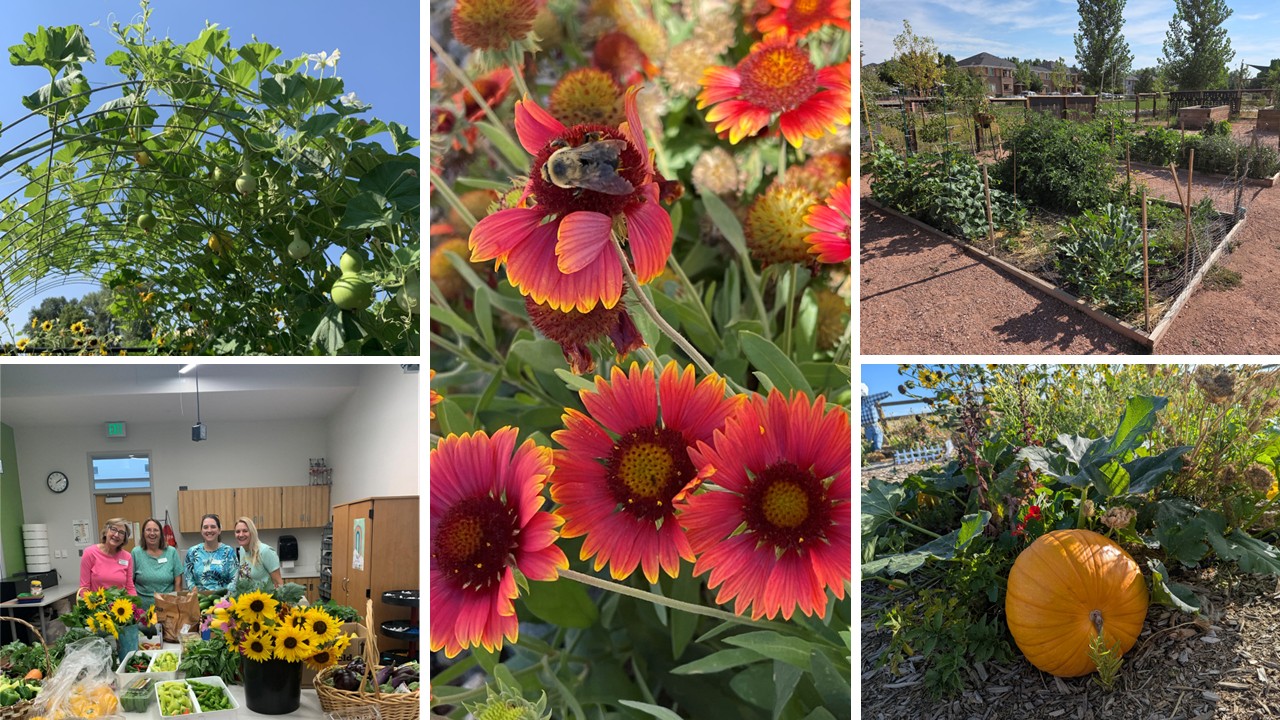
Pests were a common theme across the demonstration gardens this year.
- The Lima Plaza Demonstration Garden is the program’s pollinator showcase. CMGs struggled with rabbits chewing the irrigation lines that are located throughout much of the garden. This required CMGs to hand water while continually fixing lines.
- The Cheyenne-Arapaho Park (CAP) Demonstration Garden had ongoing issues with Japanese beetles and grasshoppers. Luckily, with a playground located next to the garden, many neighborhood kids would offer to help pluck off the insects to manage the infestations.
- The Plains Conservation Center (PCC) Demonstration Garden struggled with many pests this year, including leafhoppers, aphids, and squash bugs. Leafhoppers brought Aster Yellows to the large patch of milkweed that grows along the edge of the PCC garden. This added a new level of management for CMGs. They also learned to recognize squash bug eggs and were able to manually remove the affected leaves throughout the season, noting that adult squash bugs were more active early in the day, making them harder to find as the morning passed.
Heat was a large factor for the gardens this summer. The Pea Patch Demonstration Garden had tomato blooms dry on the plant before they could bear fruit. Both PCC and CAP have no shade in their garden spaces and struggle with hot sun every year. While PCC is designed to be a replica of an 1880s garden and cannot use modern solutions, CAP was able to cover some plots with shade cloth during the hottest parts of the summer to alleviate stress on their crops. Hudson Gardens Vegetable Demonstration Garden was the only garden that mentioned the heat being almost beneficial! They have cold air that comes up from the pond near their raised beds and have shade most of the day. While this means they struggle with sun-loving plants, they joked at least they can grow arugula all season. They have changed some of the crops they grow to better suit their space over years of observation. The Clayton Community Demonstration Garden found that their tomatoes and peppers struggled more in the cool areas of the garden, leading them to rethink when they will plant next season to counteract the problem.
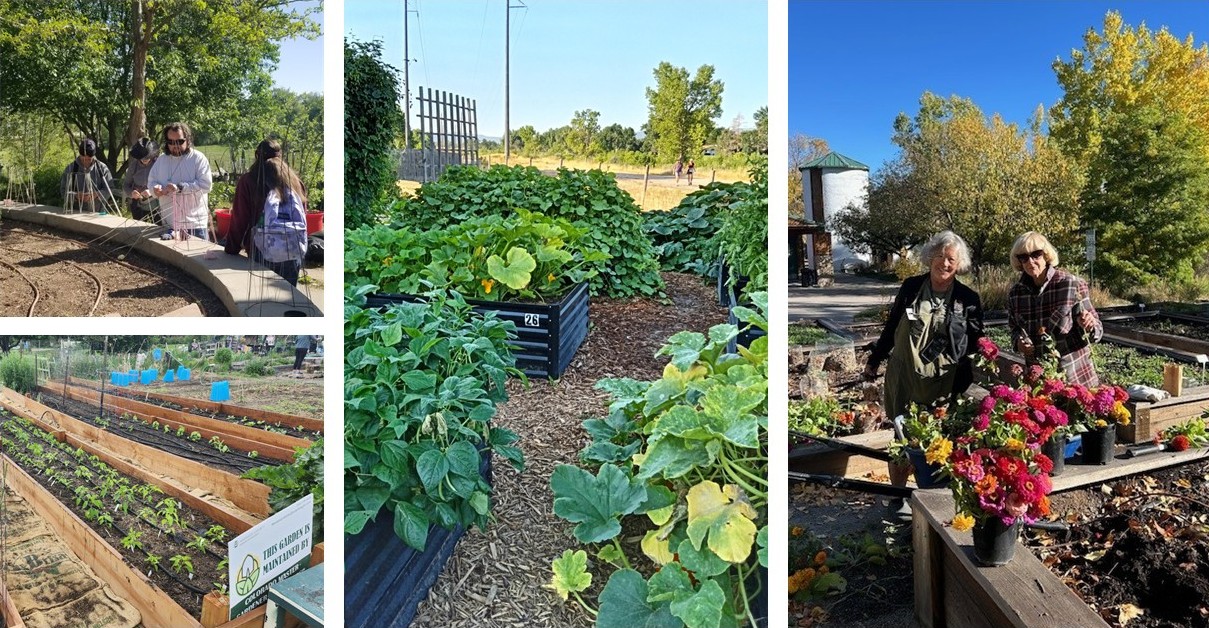
Water is a struggle for many of our gardens. While Lima Plaza had problems with rabbits chewing on irrigation lines, they also must hand water a section that does not have an irrigation system. This is done by connecting two long hoses to reach the area from the spigot. PCC has always struggled with water as the property runs off well water with no running water near the garden. This year a water tank and hose system were installed nearby that made watering much easier. CAP and Clayton do not have irrigation systems, requiring more visits to the garden to hand water every day.
Community engagement is an important part of all the demonstration gardens. At PCC, Colorado Center for the Blind (CCB), and Clayton, the gardens serve as an outdoor classroom for students and the public. Organizations and schools conduct garden programs, thereby familiarizing students, parents and the community with garden basics and the intricacies of each demo garden. Silo Park Demonstration Garden, Hudson, and Lima Plaza all have regular visitors to their gardens who want to talk about gardening. CAP, Clayton, and Pea Patch have strong connections to the gardeners who share the space with their own rented plots. CMGs answer questions while on shift and share the experience and joy of gardening with other gardeners. Most of the gardens also provide classes to the public, and two have programs for children. One shared success across all our gardens is that CMGs engage with the community around them and they look forward to sharing their passion with those who want to learn.

